
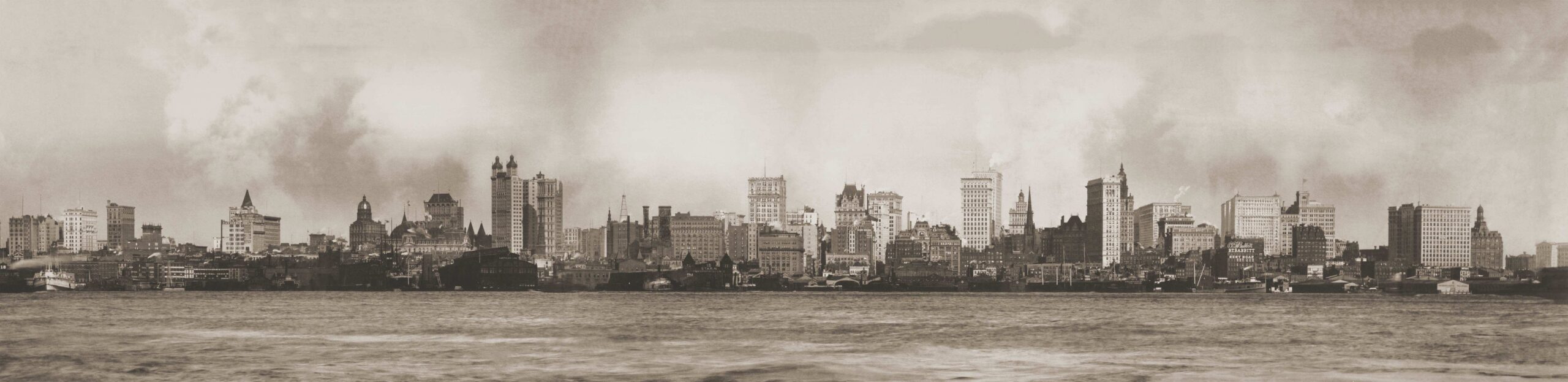
In the 1800s, New York City stood as the beating heart of American immigration. From the cobbled streets of Lower Manhattan to the bustling piers along the Hudson River, the city became a symbol of hope and opportunity for millions seeking refuge and renewal. By the mid-19th century, more than 70% of immigrants entering the United States passed through New York, earning it the nickname "The Golden Door". The journey to America was often long and perilous. Immigrants traveled in cramped steerage compartments aboard steamships, enduring rough seas, illness, and uncertainty. Upon arrival, they were greeted by the imposing skyline of Manhattan and the promise of a new beginning. From 1855 to 1890, Castle Garden served as the city's first official immigration station. Located at the southern tip of Manhattan, it processed over eight million immigrants before Ellis Island took over in 1892.
Waves of Migrantion and Their Roots
The 19th century saw distinct waves of immigration, each driven by unique circumstances. The Irish fled famine and British rule, Germans escaped political upheaval, and Italians sought relief from poverty and regional instability. Eastern European Jews arrived in growing numbers to escape religious persecution, while Chinese immigrants—though fewer in New York—faced exclusionary laws like the Chinese Exclusion Act of 1882. Between 1870 and 1900, nearly 12 million immigrants arrived in the U.S., with New York City as their primary gateway. These newcomers often settled in ethnic enclaves-Little Italy, Chinatown, and the Lower East Side-where they could find familiar languages, foods, and customs. These neighborhoods became vibrant cultural mosaics, shaping the city's identity for generations.
Arrival Stories and Struggles
The arrival experience at Castle Garden was both structured and chaotic. Immigrants registered their names, declared their possessions, and were directed to bathhouses and waiting areas. Children sometimes arrived alone, wearing tags with their names and destinations. Stories abound of young siblings reunited with parents after years of separation, or of families navigating the city with little more than hope and a few coins. Yet life in New York was far from easy. Immigrants faced discrimination, language barriers, and economic exploitation. Jobs were scarce, and wages were low. Many worked in sweatshops, built railroads, or took on dangerous labor in factories. Women were often paid less than men, and children were expected to contribute to household income. Despite these hardships, immigrants played a vital role in building the city's infrastructure and fueling its industrial growth.
Legacy and Transformation
By 1890, nearly half of New York City's population was foreign-born. Immigration transformed the city into a global crossroads, where cultures collided and coexisted. Churches, synagogues, and cultural societies sprang up to support new arrivals. Newspapers in dozens of languages circulated, and political movements, like labor unions and suffrage campaigns. Found fertile ground among immigrant communities. The legacy of 19th-century immigration is etched into the very fabric of New York. From the Statue of Liberty's torch to the tenement buildings of the Lower East Side, the city tells a story of resilience, diversity, and transformation. Without immigration, wave after wave, New York would not be New York.